
knowing him in times of difficulty
the ICMDA Sydenham Course in Aisa
A doctor shares their story of serving Christ and the medical community during a time of political instability in their country.
When the military undid a decade of democratic transition and took control of the country, I was in the capital city. It began with all phone lines being cut in the morning, with a widespread communication blackout. Gradually, rumours spread about what had happened. Since then, the situation spiralled downward into more and more violence, chaos, and despair.
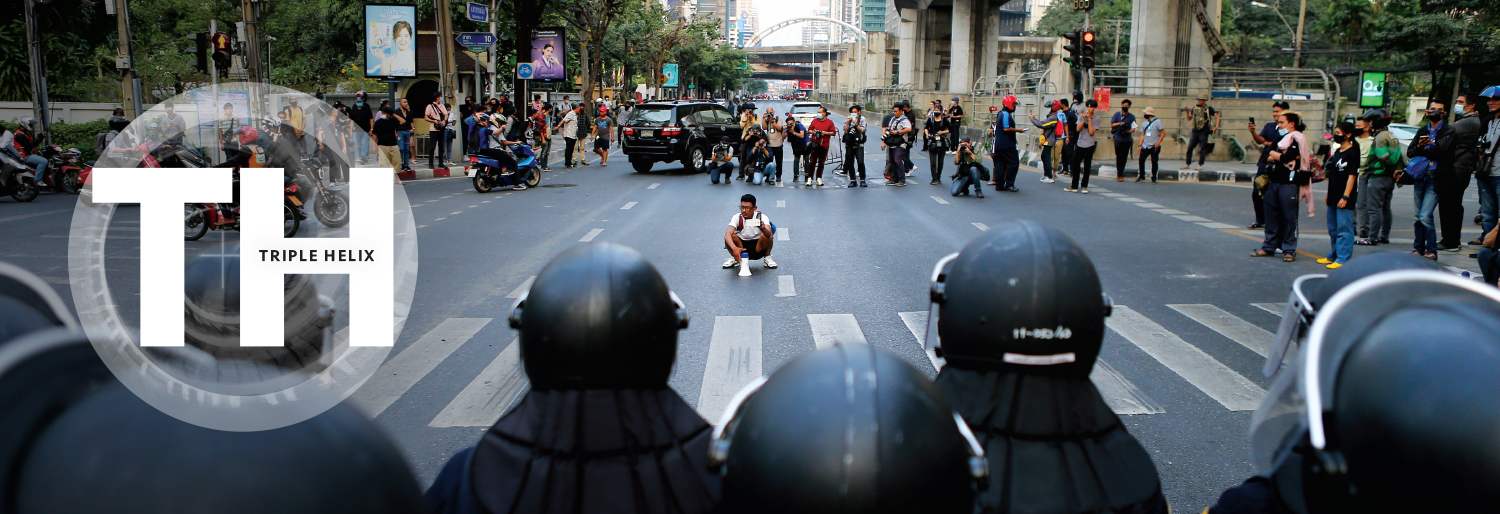
Tens of thousands of people have raised their voices to denounce the coup. The military junta has arrested thousands and killed over 3,000 innocent people in their violent crackdowns. I heard explosions and gunfire day and night from my apartment. We heard news of people going missing, being arrested, tortured, and dying. One night, we heard gunshots very close by, and two people died of gunshot wounds right in front of our apartment.
Amid this darkness, people continued living and working with rage, disappointment, hopelessness, questions, and numbness. They endured uncertainty and fear. There has been ongoing conflict, even airstrikes on medical facilities. Many junior doctors, especially those in the civil services, stood up to say ‘no’ to the military by striking, thus joining the countrywide civil disobedience movement. A large percentage of these moved to remote rural areas to hide and serve the people with no access to reasonable healthcare. Their cause is the pursuit of justice.
We read the story of Joseph in Genesis during a weekly Bible study session with students. Joseph went through his brothers’ betrayal, slavery in a strange land, loneliness, hopelessness, and imprisonment. But he kept trusting and obeying God, knowing that the Lord knows everything. God blessed him in those times of trial. Why did Joseph experience such a life? It paved the way for God’s saving purposes. Our lives also have many questions. Yet, God has been working throughout. God’s salvation is revealed in the story of Joseph. One medical student asked me to pray for him to continue to have hope in the Lord during this hopeless situation. It is easy to ask, ‘where is God?’ Each one of us is on a journey with him.
The situation in the country has yet to improve; instead, it has become worse and worse. We rarely hear news about the country or what is going on. Millions are displaced because of intense fighting, burning houses, and airstrikes. In addition, natural disasters add to the chaos and disaster. Recent severe flooding and earthquakes hit those vulnerable people. Prices of rice, cooking oils, vegetables, and eggs doubled and tripled everywhere. More children are on the street selling flowers and begging.
For those not living in conflict zones, daily routines and activities are continuing as much as possible. Life in the larger cities appears to be returning to normal, with crowds in shopping malls and restaurants, and children attending school. People seem to move on, but appearances are deceiving. Around 70 per cent of medical personnel have left the government service, refusing to work under the military junta. The ones who deeply cared for the people took a stand and are still enduring persecution, harbouring wounds of unforgiveness and injustice. They faced persecution, not only from the regime but also from colleagues who did not support them. Christian doctors experience similar challenges but persist in helping the needy wherever they may be, grappling with questions about why God permits suffering and why prayers seem unanswered.
I’ve been praying and patiently waiting to plan a way for us to seek God’s voice together. Although I remained in the country during the past three years, I was afraid to contact the junior doctors persecuted by the regime. When I facilitated the Sydenham course, the session on Nehemiah spoke to me: ‘When I heard these things, I sat down and wept’. (Nehemiah 1:4a) Am I really listening to those junior doctors? What is the reason for my presence here? Through persistent prayer, the Lord guided me to follow Nehemiah’s example of sitting down, walking alongside others, and sharing their sorrows. Listening to God is crucial for us to grasp his purpose for our lives. I phoned Dr N, one of those doctors, to invite them to the online Sydenham course. Encouraged by the course, he developed a vision to introduce the Sydenham course to students and junior doctors, particularly during this challenging period. He was enthusiastic about collaborating on the course, and with God’s help, we launched it in the national language.
We were uncertain about the number of doctors who would enrol in the course, due to varying circumstances and positions. Amazingly, the Sydenham course brought together doctors who had left the government service in protest and those who had continued to serve under the new military administration. Sixteen doctors registered, and ten finished the course. They were from various backgrounds, including the public health sector, managing non-governmental work, or serving people in rural areas with fewer resources. We were very concerned about how we would facilitate the group because usually those two groups do not meet, as those under the services are often pressured to inform on those who left the services, so it could be dangerous to those who left the services. We concentrated on the theme and materials we were learning, avoiding political topics to safeguard the group.
During the course, Dr N shared, ‘I became voiceless in the society’. He was a surgeon who worked in the hospital from early morning to late evening, but now he stays at home with his children and serves in the church. Even at such a time, he confesses that God is good all the time, but he really appreciated the course as an opportunity to meet other Christian doctors who were facing similar challenges and restrictions. Seeing others who were eager to learn the Word of God inspired him to continue to fix his eyes on Jesus, not on the situation he has been facing. He was very depressed because he has been facing difficulties in practising his profession. Through the sessions, God encouraged him that he knows him and still wants him to serve people in the medical field in this country. The Lord wants him to shine and show his glory, sharing the goodness of God.
God is at work among those junior doctors. I never imagined that we would come together to pray. It was truly wonderful to witness them opening up and talking about their problems based on his teachings. Our bond in fellowship is nurtured by genuine sharing. I saw this as the starting point for the process of reconciliation. Following the course, they asked to keep meeting to study his teachings and for fellowship, so we agreed to meet monthly.
This year, the International Christian Medical and Dental Association (ICMDA) invited me to go to the European Christian Leadership Forum (ELF) in Poland. The event took place in a tiny village surrounded by breathtaking mountains. Despite being located in what is now a peaceful part of Eastern Europe, the area has a long history of warfare, hatred, and uncertainties, even in recent decades. Witnessing the beginning of the ELF, with its focus on spreading the good news of Jesus, was truly amazing. I met a leader from Ukraine praying together with Russians.
Furthermore, I made a stop at Auschwitz before making my way to the airport, completing a goal on my bucket list. As I walked into that place of horror, I could not speak. What I couldn’t ignore was the thought of what the people knew. They claimed ignorance, yet they could have known if they chose to. They looked on as the train, carrying a full load of passengers, was transported to its destination. If they had opened their eyes, they could have known about it. They closed their eyes in their typical daily life. They could have confronted fear, uncertainty, powerlessness, ethnocentrism, and the like.
I realised the situation sounds very similar to what is happening in my country. We are similar in how we close our eyes and overlook what is happening. Living among people in this tough period, I contemplate who will be their voice if I do not speak out. The visit inspired me to listen actively to those doctors and pass on their stories. It’s a blessing from God that I can use this article to share their stories. God uses the Sydenham course to speak in our lives at this time of difficulty. Please pray for healing in their hearts and pray for a ‘Nehemiah’ to be raised to rebuild the country.
The Sydenham course aims to equip healthcare professionals for ministry leadership by encouraging them to live faithfully as Christians in their professions. The course is named after the physician Thomas Sydenham (1624-1689), a committed Christian who lived out his faith in his practice. He has been called ‘The Father of English Medicine’. For more details of the Sydenham Course, go to training.icmda.net/courses/sydenham