

• Log In
  • Join
  • Shop
  • Donate
The Christian Medical Fellowship: Uniting & equipping Christian doctors & nurses to live & speak for Jesus Christ.
  • 0Shopping Cart
Christian Medical Fellowship
  • About
    • About
      • the Christian Medical Fellowship unites and equips Christian doctors and nurses to live and speak for Jesus Christ. We were formed in 1949. We currently have 4,000 doctors, 500 medical and nursing students, and 450 nurses and midwives as members.
      • Who we are

        find out about us and contact the team
        • heritage
        • staff
        • trustees
        • vacancies
      • What we do

        • aims
        • what we do
        • frequently asked questions
      • What we believe

        the core beliefs and values behind CMF, and who we associate and work with
        • statement of faith
        • affiliations
  • News
    • Latest News
      • what we are writing about
        • Blogs
      • the trouble with opt-outs

        December 1, 2025
        Read more
        https://www.cmf.org.uk/wp-content/uploads/2023/08/organ-donation.jpg 240 400 Trevor Stammers https://www.cmf.org.uk/wp-content/uploads/2023/08/CMF-Logo-MONO-TRANSPARENT-340px.png Trevor Stammers2025-12-01 08:00:492025-11-27 13:23:42the trouble with opt-outs

        Three-parent embryos: can the end ever justify the means?

        August 12, 2025
        Read more
        https://www.cmf.org.uk/wp-content/uploads/2025/08/AdobeStock_1252305052-scaled.jpeg 1440 2560 Dr Rick Thomas https://www.cmf.org.uk/wp-content/uploads/2023/08/CMF-Logo-MONO-TRANSPARENT-340px.png Dr Rick Thomas2025-08-12 08:00:412025-08-08 10:29:05Three-parent embryos: can the end ever justify the means?

        The Leng Review and the leadership void: A call to fill the gap

        August 8, 2025
        Read more
        https://www.cmf.org.uk/wp-content/uploads/2025/08/AdobeStock_1292854122-scaled.jpeg 1705 2560 Steve Sturman https://www.cmf.org.uk/wp-content/uploads/2023/08/CMF-Logo-MONO-TRANSPARENT-340px.png Steve Sturman2025-08-08 08:00:392025-08-08 10:33:25The Leng Review and the leadership void: A call to fill the gap
  • Events
    • Latest Events
      • book in for CMF conferences, training days, and other events for Christians in the healing and caring professions
      • Current Month

        Date

        Event Type

        All

        Doctors

        Global

        Junior Doctors

        Nurses & Midwives

        Students

        10jan10:00 am4:30 pmRASH: Refugee and Asylum Seeker Health Course, London

        Event Details

        God calls us to care for the stranger in our midst, to protect orphans and widows,

        Event Details

        God calls us to care for the stranger in our midst, to protect orphans and widows, to ‘act justly and love mercy’ . (Micah 6:8) How does this translate to the way we care today?

        Given the proposed changes to the way that our asylum system works, how can we provide the best possible healthcare to those in need?

        The ‘Refugees and Asylum Seekers Health Course’ (RASH) aims to equip Christian healthcare practitioners and others to:

        • Improve knowledge of the healthcare needs, responses and challenges for refugees and asylum seekers in the UK
        • Hear examples of good practice
        • Foster a dialogue among those working with refugees and asylum seekers for mutual encouragement and support
        • Inspire creative ways to engage with health systems for better provision, support, and care

        View the full programme here.

        The programme is an interactive learning experience led both by those who have been refugees and those who are healthcare professionals in this field. Local charities or churches working with refugees and asylum seekers will also find this day useful. If you encounter people from outside the UK in your everyday practice, then this is the day for you.

        more

        Time

        January 10, 2026 10:00 am - 4:30 pm(GMT+00:00)

        Location

        London

        CalendarGoogleCal

        Yarnfield, Stone ST15 0NLYarnfield Park Training & Conference Centre

        30jan01febStudent Conference 2026

        Event Details

        Select:ID Who are you? It is a fundamental question to answer as you start your journey as a health professional. The world has a lot of answers, you are your

        Event Details

        Select:ID
        Who are you?

        It is a fundamental question to answer as you start your journey as a health professional. The world has a lot of answers, you are your job, your sexuality, your gender, or your racial and national identity. But the gospel of Jesus tells us that we are forgiven, we are chosen, we are beloved, we are made holy, and we are God’s own treasured possession. How do we live out that truth in our everyday life, our studies, and our careers?

        Join us at CMF’s Student Conference – from 30 January to 1 February 2026 (Yarnfield, Staffordshire)

        If you’re a Student, here’s our top tips for booking
        1. Grab a cup of tea, and have a read to choose four seminars you would like to attend, look through your options in our Conference Programme.

        2. Get your Student Discount Code.

        If you have you joined CMF it will be able to access it via the member portal. If you are not yet a member you can join here

        3. Now you’re ready to book onto Student Conference 2026.

        Thanks to generous donations, extra subsidies may be available to help students attend the Student Conference. If any bursary is available, we’ll be in touch — any support will be arranged as a refund after the event.

        For non-Students
        1. If you’re a Medical School Link coming with a group of students, please select the Med School Link Ticket on the booking form
        2. If you have happy memories of your time at Student Conference, and if you would like to invest in the next generation of Christians healthcare professionals please use the donation form:

        more

        Time

        January 30, 2026 5:00 pm - february 1, 2026 3:00 pm(GMT+00:00)

        Location

        Yarnfield, Stone ST15 0NL

        Yarnfield Park Training & Conference Centre

        CalendarGoogleCal

        05mar8:00 pm9:00 pmChristians in Healthcare Leadership Spring Webinar 2026 - How to Raise Concerns

        Event Details

        Open to all CMF Members 8 – 8.05. Introduction 8.05 – 8.15 Loving the individual, but hating the sin: Lessons from the woman at the well 8.15 – 8.30 Raising concerns: Avoiding the negative

        Event Details

        Open to all CMF Members

        8 – 8.05. Introduction

        8.05 – 8.15 Loving the individual, but hating the sin: Lessons from the woman at the well

        8.15 – 8.30 Raising concerns: Avoiding the negative and positively influencing culture

        8.30 – 8.45 Counting the cost: Institutional whistle blowing & Dealing with lack of insight

        8.45 – 9.00 Discussion and prayer

        Registration now, you will receive the Zoom details nearer to the event. 


        more

        Time

        March 5, 2026 8:00 pm - 9:00 pm(GMT+00:00)

        CalendarGoogleCal

        Yarnfield, Stone ST15 0NLYarnfield Park Training & Conference Centre

        08may(may 8)6:00 pm10(may 10)2:00 pmNational Conference 2026

        Event Details

        Save the Date! Bookings will open in January 2026 for this conference...more details are coming soon.

        Event Details

        Save the Date!

        Bookings will open in January 2026 for this conference…more details are coming soon.

        Time

        May 8, 2026 6:00 pm - may 10, 2026 2:00 pm(GMT+01:00)

        Location

        Yarnfield, Stone ST15 0NL

        Yarnfield Park Training & Conference Centre

        CalendarGoogleCal

      • See all events
  • Ministries
    • Ministries
      • the heart and soul of the fellowship
        • senior doctors and retirees
        • resident doctors
        • students
        • nurses & midwives
        • global
        • ethics, advocacy & public policy
        • volunteering & training
        • pastoral
        • member services
        • other
  • Resources
    • Resources
      • CMF's resources are there for Christians working or studying in the health professions, as well as for churches and Christians in general
        • publications
        • bookstore
        • blogs
        • subject archive
        • podcasts
        • global resources
        • prayer resources
      • https://www.cmf.org.uk/wp-content/uploads/2025/10/Cover.png 503 359 Steve Fouch https://www.cmf.org.uk/wp-content/uploads/2023/08/CMF-Logo-MONO-TRANSPARENT-340px.png Steve Fouch2025-10-17 14:46:542025-11-06 20:06:28Triple Helix – autumn 2025
        https://www.cmf.org.uk/wp-content/uploads/2024/09/Freshers-Nucleus.png 610 424 Steve Fouch https://www.cmf.org.uk/wp-content/uploads/2023/08/CMF-Logo-MONO-TRANSPARENT-340px.png Steve Fouch2025-09-05 14:54:582025-09-05 14:54:58Freshers’ Nucleus 2025
        spotlight summer 25 front cover
        https://www.cmf.org.uk/wp-content/uploads/2025/07/spotlight-24-thumbnail.png 742 741 Kevina Kiganda https://www.cmf.org.uk/wp-content/uploads/2023/08/CMF-Logo-MONO-TRANSPARENT-340px.png Kevina Kiganda2025-07-30 12:24:522025-07-30 12:24:52spotlight summer 2025
        https://www.cmf.org.uk/wp-content/uploads/2025/11/CMFFile78Thumbnail.png 1056 752 christianmf https://www.cmf.org.uk/wp-content/uploads/2023/08/CMF-Logo-MONO-TRANSPARENT-340px.png christianmf2025-11-03 13:58:142025-11-06 20:48:28CMF file 78 – ethics: a matter of principle
        prayer diary dec to march 26 thumbnail
        https://www.cmf.org.uk/wp-content/uploads/2025/12/prayer-diary-dec-to-march-26-thumbnail.png 373 258 christianmf https://www.cmf.org.uk/wp-content/uploads/2023/08/CMF-Logo-MONO-TRANSPARENT-340px.png christianmf2025-12-01 13:30:392025-12-01 13:30:39Prayer Diary | December 2025-March 2026
  • Contact
    • Contact Us
      • We aim to reply as quickly as possible. If you want us to telephone, please include a phone number in your email text.
      • Member services

        for any communications and questions about CMF membership
        • member services ministry page
        • financial queries
        • frequently asked questions
        • privacy policy
        • safeguarding policy
        • legal and copyright
      • Room hire

        looking for a meeting place in London? Our meeting rooms are available in central London
        • conference and meeting rooms
      • Get in Touch

        • contact CMF
  • Search
  • Menu Menu
  • About
    • Who We Are
      • Our Heritage
      • CMF Staff Team
      • Trustees
      • Vacancies at CMF
    • What We Do
      • our aims
      • What We Do
      • Frequently asked questions
    • What We Believe
      • Statement of faith
      • Affiliations
  • News
  • Events
  • Ministries
    • Seniors
    • Residents
    • Students
    • Nurses & midwives
    • Global
    • Ethics, Advocacy & Public Policy
    • Volunteering & training
    • Pastoral
    • Member services
    • Other ministries
  • Resources
    • Publications
    • Bookstore
    • Blog
    • Student Archives
    • Podcasts
    • Global Resources
    • Prayer Resources
  • Contact
    • Members Services
      • Member services
      • Privacy Policy
      • Safeguarding Policy
      • legal matters
    • Room Hire
    • Get in touch

personhood

What does it mean to be a ‘person’? We all think we know the answer, but philosophers and ethicists have contested the idea for decades. Today’s understanding is complex and stands in sharp contrast to a biblical understanding of what it means to be a person.

what are we talking about when we talk about personhood?

Personhood is a concept in philosophy, which proposes that to be fully worthy of all the benefits of society, mere membership of the human race is insufficient.[1] One must be a person as well as a human. In fact, for many thinkers, being human is not even a necessary characteristic, let alone a sufficient one. They propose that some animals have a better claim to the rights of personhood than do some humans.[2]

Primary among these contested rights is the right to life. Vulnerable to losing these rights are those at the very earliest stages of their human journey and those nearing its end. To many people, it seems incontrovertible that the human zygote (fertilised egg), though in possession of its own unique human DNA, should not count as a person. However, if this is so, at what point between the moment of fertilisation and fully-formed adulthood might personhood be attained?

In this File we will look at some of the ways philosophers and ethicists have tried to answer this question, and examine their limitations and the assumptions underpinning them. We will also consider how to think biblically and Christianly about personhood and consider how we can defend these arguments with groups who disagree with us.

how could we know who is a person?

The idea that the word ‘person’ means something distinct from ‘human’ dates back at least to John Locke in 1694. He defined a person as ‘a thinking intelligent Being, that has reason and reflection, and can consider itself as itself, the same thinking thing in different times and places‘.[3] It seems highly unlikely that a newborn could meet these criteria – and it could never express that to us if it did. (This raises the question of how we would know when a being had obtained personhood by this measure. Is it when they can consider themself a rational, continuing, thinking being, or when they can tell us that they do? We will look further at this later.)

But where did Locke’s definition come from? It is impossible to be certain, but it seems likely that he formed it through observation rather than, say, through divine revelation. He observed the world around him and the kinds of humans that he saw and, applying his understanding of the world to his observations, he formed a conclusion.

In a webinar for the International Christian Medical and Dental Association (ICMDA), Dr Vinod Shah identifies this kind of meaning-making as ‘anthropocentric’ as opposed to ‘revealed’ through Scripture.[4] Anthropocentric definitions of personhood can be scientific, sociological, or philosophical, but they all begin with what we can observe about humankind.

Following Locke, many definitions of personhood rest fully or in part on a concept of self-awareness and reason.[5]

Others start at the other end of the problem. Their position is that the question of personhood can be resolved by understanding the issue of harm. They want to consider, ‘Can this individual be said to be harmed by having their life ended?‘ If so, then that is the necessary and sufficient criterion for personhood. Many of these thinkers hold that in order to be harmed, an individual must be self-aware – must know that he or she is experiencing a harmful event. For example, Alberto Giubilini and Francesca Minerva state:

We take ‘person’ to mean an individual who is capable of attributing to her own existence some (at least) basic value such that being deprived of this existence represents a loss to her.[6]

This at least provides some rationale for why self-awareness should be the morally significant characteristic in decisions about who counts as a person.

Peter Singer is perhaps the most famous proponent of the ‘harm’ argument, using it as his core argument in his Practical Ethics.[7] He states that, ‘the most plausible arguments for attributing a right to life to a being apply only if there is some awareness of oneself as a being existing over time, or as a continuing mental self’.[8]

He makes it clear that he strongly supports abortion, particularly for fetuses in whom a disability or life-limiting condition is detected (he cites haemophilia and Down syndrome as conditions which are not severe enough to make life objectively ‘not worth living‘ for the child, but which the parents may still find sufficiently concerning to consider aborting the fetus and seeking to conceive a ‘replacement’ child).[9] Since the fetus cannot, in his view, be self-aware or have any hope or desire to continue living, he considers that there is no intrinsic reason not to terminate its life. It cannot, itself, be harmed by being killed.

Singer then follows his line of argument further to its logical conclusion that ‘birth does not mark a morally significant dividing line’.[10]

I cannot see how one could defend the view that fetuses may be ‘replaced’ before birth, but infants may not be…Self-consciousness, which could provide a basis for holding that it is wrong to kill one being and replace it with another, is not to be found in either the fetus or the newborn infant.…killing a disabled infant is not morally equivalent to killing a person.[11]

weaknesses of anthropocentric definitions

If we are to accept this position – that a person is one who would be harmed if their life was ended, and that in order to be thus harmed, they must have at least some basic level of self-awareness – the obvious question that presents itself is ‘when does an infant become self-aware?‘ And the obvious answer is, ‘we don’t know’.

Singer notes that even children as old as two or three have difficulty comprehending the idea of their own existence and the potential future ending of that existence. However, he decides to err on the side of caution and suggests that, ‘there should be at least some circumstances in which a full legal right to life comes into force…a short time after birth – perhaps a month’.[12] He offers no explanation for why this is an appropriate cut-off point, and it is an area of unusual inconsistency in his writing. He elsewhere insists that self-consciousness is the only relevant moral ground and dismisses the ‘distinctively Christian attitude’ that informs the modern Western tendency to place a high value on the lives of infants.[13] Yet, in accepting that there should be an appropriate ‘safety margin’ to ensure we do not accidentally end the lives of beings who are self-aware but lack the language to communicate the fact, he takes an inexplicably conservative stance.

Other obvious questions also arise, such as whether someone in a coma or minimally conscious state should retain the personhood they have previously enjoyed, or whether they lost it on losing consciousness. And if the latter, do you and I lose our claims to personhood every time we fall asleep, or go under general anaesthetic? And what about those with severe cognitive disabilities? Are they persons? Is the position different if they were born with the disability or developed it as a result of a catastrophic injury?

A further weakness of the prevailing philosophical stance is its individualistic nature. It is based on the person’s understanding of themself in the world and makes no reference to his or her relationship to others. Although some philosophers, such as Mary Ann Warren and Peter Singer, agree that it might be wrong to kill an infant if this would cause harm or distress to others (their parents, for instance), few have any concept that the infant being part of the human community is a morally significant factor in this.

The Bible, on the other hand, sees us as deeply relational beings. We were created by the three-person godhead, ‘in our image, in our likeness‘, (Genesis 1:26) and thus we were created by persons to be in relationship with persons. We are all interrelated and interdependent beings.

a theological perspective

These points form two of the eight characteristics that describe aspects of what it is to be a person as put forward by theologian Louis Janssens:

  1. A subject: A biblical understanding of personhood starts with the acknowledgement that human beings exist as creatures who are under the rule of God their creator. They are subjects of his authority.
  2. An embodied subject: As subjects, human beings are also defined by having a human body.
  3. Part of the material world: The first chapters of Genesis place humankind firmly within the created world.
  4. Inter-relational with other persons: In Genesis, God recognises that Adam is insufficient on his own and creates a companion, Eve.
  5. An interdependent social being: Personhood expresses itself in the way that we relate as social beings. When on earth, Jesus showed us an interdependent concept of relationship.
  6. Historical: Individual people exist within a historical framework.
  7. Equal but unique: Each person has equal rights, yet we are not all the same.
  8. Called to know and worship God: One feature of a person is their ability to know and respond to God.[14]

These form a helpful framework for building a Christian understanding of personhood. In 1 Corinthians 12, the Apostle Paul describes Christians as all being part of one body. Not only do our capacities and competencies not matter, but we are all equally needed and valued. ‘In fact, God has placed the parts in the body, every one of them, just as he wanted them to be.’ (1 Corinthians 12:18) God sees no difference in value between individual humans based on their capacities or competencies. Any weaknesses or deficiencies we see in ourselves or others are not accidents or flaws, according to Paul. They are part of God’s design.

In fact, if he does differentiate, it is in precisely the opposite direction to what we might think:

The eye cannot say to the hand, ‘I don’t need you!’ And the head cannot say to the feet, ‘I don’t need you!’ On the contrary, those parts of the body that seem to be weaker are indispensable, and the parts that we think are less honourable we treat with special honour. And the parts that are unpresentable are treated with special modesty, while our presentable parts need no special treatment. But God has put the body together, giving greater honour to the parts that lacked it, so that there should be no division in the body, but that its parts should have equal concern for each other. (1 Corinthians 12:21-25)

Those members of society that philosophers deem dispensable, disposable, or replaceable, God treats with special honour. He declares them indispensable – vital to the thriving of the whole.

To the charge that this privileges our species over others, regardless of capacity or contribution, we can only agree – but need not find this problematic. In the Genesis account, God takes pains to emphasise the uniqueness of humans. Only Adam was made in the image of God (Genesis 1:26-27), then given life by the breath of God (Genesis 2:7). God wanted to give us the understanding that we were created different from everything else. Distinct. Special. We were commanded to rule over all of creation (Genesis 1:26-28). Our specialness does not give us licence to cause harm or suffering to other species, but nor does it leave any scope to afford members of other species access to the rights and privileges of humans, whatever their capacities.

Where does personhood begin, then, for the Christian believer? Is it at the point of fertilisation or implantation? Perhaps, as was believed for centuries, it is at the ‘quickening’ – the time when the baby begins to move inside the womb. Or maybe it is at the point when the child takes their first breath?

Each of these is an arbitrary point in the development of a human life. Fertilisation is the only decisive moment at which a new human comes into being. There is, then, a continuity from fertilisation all the way through to adulthood. All a fetus needs to reach it is time and nurture. (Sometimes, of course, a fertilised egg splits and two embryos implant, becoming identical twins. These individuals have identical DNA, though they may develop genetic mutations in the womb. In a laboratory context, cloning a human or ‘growing’ one from synthetic material bypasses the fertilisation stage, but in any scenario, there is a point at which a new individual is formed.) Any point after this is arbitrary and based on discernible characteristics and capacities. It is no different from basing it on an ability to express an understanding of oneself as a rational being existing in time and space, with a desire to go on existing. For the Christian, then, fertilisation seems the logical point we must settle on.

Dr Vinod Shah points out that the Bible teaches something yet more radical than this.[15] In the first verses of Jeremiah, the prophet reports that God told him, ‘Before I formed you in the womb I knew you‘. (Jeremiah 1:5) In Psalm 139:16, David famously says to the Lord, ‘Your eyes saw my unformed body; all the days ordained for me were written in your book before one of them came to be‘. In case we are tempted to think that these are isolated examples, relating only to these two extraordinary men of God, Paul tells the believers in Ephesus that God ‘chose us in [Christ] before the creation of the world to be holy and blameless in his sight‘. (Ephesians 1:4) We were each known, individually, as persons, before the foundation of the world. The sperm and egg fusing were only one moment in our story – and nowhere near its beginning. ‘Personhood,’ says Dr Shah, ‘starts in the mind of God.’

understanding the ground we are standing on

Of course, those outside Christianity reject this line of reasoning. It is based on faith or revelation from Scripture, both of which are considered inadmissible as evidence.

To respond to such a criticism, it is necessary to recognise that nobody stands nowhere – everyone has a set of assumptions that are the foundations they build their theories on. The concept that scientific method is the way to discover truth is a philosophical belief, perhaps even a statement of faith. The idea that rationality is the defining feature of personhood is also a faith position. It is held by rational beings who naturally believe that their perspective is the correct one. But on what grounds has that been determined? It seems so obvious, especially to people who value the work of the mind, that it is hard to realise – let alone help someone else realise – that it is a statement of faith.

We are unlikely to be able to convince a non-believer that personhood is inherent in all humans and absent from all non-humans, regardless of capacity, based on its origin in the mind of God. Probably the most we can do, when talking to friends and colleagues about it is to help them recognise that their position – like those of all philosophers – is based on some core assumptions.

Peter Singer is perhaps the clearest example of this. It seems obvious to him that a fetus has no interest in living, and therefore cannot be harmed by being killed (though it may be harmed if it suffers in the process).[16] He has taken this and other observations and intuitions about the world and tried to formulate a definition of personhood that fits around them, ensuring that it rules out certain types of beings, and rules others in. His very fuzzy answer to the question of when in early childhood personhood begins suggests that he intuitively wants to grant personhood to toddlers but cannot find a way to do so without also including fetuses.

Daniel Dennett admits that personhood is a difficult concept to define, and in fact reveals that he expects the definition to be something we can discover, not something philosophers should decide:

One might well hope that such an important concept, applied and denied so confidently, would have clearly formulatable necessary and sufficient conditions for ascription, but if it does, we have not yet discovered them.[17]

Is Dennett verging on saying that personhood is something which must be revealed? He ought to be, because otherwise all he is able to say is ‘you are a person if I say you are’. And indeed, this is all any philosopher working on anthropocentric grounds is able to say. The position of the Christian, on the other hand, is that, ‘you are a person if God – the creator of the universe and of you – says you are’. Either might be equally hard to swallow, but being able to demonstrate that philosophers disagree on the necessary and sufficient conditions, and essentially each must end up making their own judgement call, may give open-minded interlocutors sufficient cause to question the assumptions underpinning their own position.
This series arose out of discussions within the Medical Study Group of the Christian Medical Fellowship. The views expressed in these papers are not necessarily those of the publisher. CMF Files can be ordered from CMF.

Author details

  • Jennie Pollock

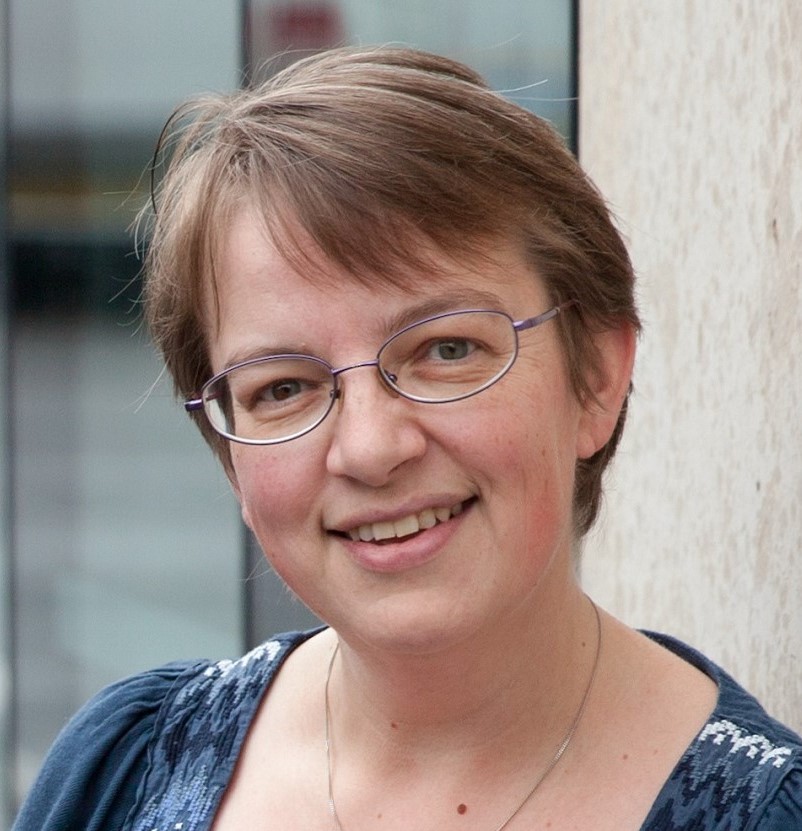
    Jennie Pollock is the Head of Public Policy at the Christian Medical Fellowship, and a part-time freelance writer and editor. She has an MA in Philosophy and loves to think, read and write about the assumptions underpinning our cultural values.

    View all posts

Related Publication

  • CMF File Issue 75
    CMF File 75 – personhood

References

1. See Spaemann R. Persons: The Difference between ‘Someone’ and ‘Something’. Oxford: Oxford University Press, 2017

2. See, eg Wise S. Chimps have feelings and thoughts. They should also have rights, TED Talk March 2015. Video and transcript available online at: bit.ly/3oX0HPK

‘They really are slaves’: US lawyer argues chimps are people too, Agence France-Presse. 21 March 2015. bit.ly/31OQB3U;

Berns G. Dogs Are People, Too, New York Times. 5 October 2013. nyti.ms/31L5bth

3. Locke J. An Essay Concerning Human Understanding, (The Clarendon Edition of the Works of John Locke), Peter H. Nidditch (ed.), Oxford: Oxford University Press, 1975. Quoted in stanford.io/2SFc5fu

4. Shah V. Personhood – A Christian understanding, ICMDA Webinar. 7 October 2022 bit.ly/3qWyCt2

5.Examples include:

Tooley M. Abortion and Infanticide. Philosophy & Public Affairs, 2, 1972

Dennett D. Conditions of Personhood. In: Rorty, R. (ed.) The Identities of Persons. Berkeley: University of California Press. 1976,

and Beauchamp T. The failure of theories of personhood. Kennedy Inst Ethics J,9, 1999.

I am indebted to Miller T. ‘Who is a person and how should I treat them?’ (St Mary’s University unpublished dissertation. 2020) for these references.

6. Giubilini A., Minerva F. ‘After-birth abortion: why should the baby live?’ Journal of Medical Ethics (2013) 39: p. 262.

7. Singer P. Practical Ethics. Second edition. Cambridge: Cambridge University Press. 1993.

8. Singer P. Practical Ethics. p. 183

9. Singer P. Practical Ethics. pp. 184-188

10. Singer P. Practical Ethics. p. 188

11. Singer P. Practical Ethics. p. 188, 191

12. Singer P. Practical Ethics. p. 172

13. Singer P. Practical Ethics. p. 172

14. Adapted from: Moore P. What is a person? CMF File 10, 2000. cmf.li/31S48aP.

15. Op Cit. Shah 2022

16. Op Cit. Singer P. Practical Ethics. p. 164

17. Dennett D. Conditions of Personhood. In: Rorty, R. (ed.) The Identities of Persons. Berkeley: University of California Press. 1976. Available at: philpapers.org/archive/DENCOP.pdf

Pages

  • About
  • Advocacy & Public Policy
  • Affiliations
  • All FAQs (Helpie FAQ)
  • Articles, briefing papers and blogs
  • Associates
  • Audio, imagery, and video consent
  • Basket
  • Become a Workplace link/Welcomer
  • Blog
  • Bookstore
  • Bringing people together to make a difference
  • Catalyst Teams
  • Change Contact Details
  • Change Your Membership
  • Checkout
  • Christians in Healthcare Leadership Network
  • Christians in Healthcare Leadership Network (Emerging Leaders)
  • CMF Catalyst Teams & specialty leaders pre-conference
  • CMF Connect | National Conference 2025
  • CMF Connect | Residents’ Conference 2025
  • CMF Global – CMF File Latest Banner
  • CMF Global – Nucleus Latest Banner
  • CMF Global – Prayer Diary Latest Banner
  • CMF Global – Spotlight Latest Banner
  • CMF Global – Triple Helix Latest Banner
  • CMF Global Christmas greetings
  • CMF Global Element – FAQs
  • CMF Group Locator
  • CMF Home
  • CMF Ireland
  • CMF Podcasts
  • CMF Scholar
  • CMF Staff Team
  • CMF’s Values
  • Conference and Meeting Rooms
  • Contact
  • could I be a mentor
  • CTCA summary
  • Current Consultations
  • Current teams
  • Day of Prayer for the Health Service
  • DeepER Fellowship Opportunities
  • Doctors
  • Donations
  • Electives
  • Euro Membership
  • Euro Membership Rates
  • Events
  • Events at CMF
  • Facts
  • Find Us
  • Finger on the Pulse podcast
  • Frequently asked questions
  • Freshers
  • Friends
  • Gift Aid Declaration
  • Global
  • Global Christmas Card
  • Global opportunities
  • Global Resources
  • Global Track
  • Graduating
  • Health + Care Sunday
  • Helpie FAQ – Group Sample
  • Home-based roles
  • How can we serve you?
  • international health professionals
  • Job Opportunities
  • Junior Doctors’ Conference 2024 Programme
  • Legacies
  • legal matters
  • Local student groups map
  • Log In
  • Login temporarily suspended
  • Meet the team
  • Meet the team
  • Member services
  • Member’s Mentoring Scheme
  • Membership
  • Membership Account
  • Membership Billing
  • Membership Cancel
  • Membership Checkout
  • Membership Confirmation
  • Membership Invoice
  • Membership Levels
  • mentoring – a great way to grow
  • Ministries
  • My account
  • National Conference 2025 programme
  • National Conference 2025 Weekend
  • Nucleus
  • Nurses & midwives
  • Office-based roles
  • Other events for students
  • Other ministries
  • our aims
  • Our Heritage
  • Pastoral care, wellbeing & mentoring
  • Prayer Resources
  • Press and Media Enquiries
  • Privacy Policy
  • Profile: Team Leader
  • Psychiatry Day Conference 2025
  • psychiatry specialty network
  • Publications
  • Quick Guides
  • Request a call-back
  • Resident Doctors’ Conference programme
  • Residents
  • Safeguarding Policy
  • Saline Solution
  • Search
  • Seniors
  • Seniors’ Conference 2025 programme
  • Shop
  • Sign In / Join
  • Starting Work
  • Starting Work – NAM
  • Statement of faith
  • Student blog
  • Student conference
  • Student Conference 2025 Programme
  • Student graduation details
  • Student Nurses and Midwives
  • Student Programme 2026
  • Students
  • Students’ Irish Conference
  • Supporting the Family
  • Team roles
  • Test Page
  • the assisted suicide debate – some key CMF resources
  • Trustees
  • Vacancies at CMF
  • Vision, mission, aims & values
  • Volunteer FAQs
  • Volunteer Opportunities
  • Volunteering / Get involved
  • Volunteers Profiles
  • WebFX Test
  • Welcome Scheme
  • What are Catalyst Teams?
  • What We Do
  • Who are you looking for
  • Willing hearts, helping hands
  • women’s health network
  • Your Profile

Categories

  • Abortion Act
  • Abortion Decriminalistation
  • Assisted Dying
  • Assisted Suicide
  • Audio & VIdeo
  • Bangladesh
  • Blog
  • BMA
  • Brazil
  • British Medical Association
  • Cameroon
  • Care
  • Care Not Killing
  • Children
  • Christianity
  • CMF
  • Conscience
  • Conscientious Objection
  • Culture & Society
  • Disability
  • Dying
  • Ectogenesis
  • Ecuador
  • Elderly
  • Elective Reviews
  • End of Life
  • End of Life Care
  • Eswatini
  • Euthanasia
  • Euthanasia Prevention Coalition
  • Falconer Review
  • Featured
  • Francis Report
  • Gender
  • Gender Dysphoria
  • Gender Identity
  • Gender Reassignment
  • Ghana
  • Global Health – Resources
  • Global Health and Mission
  • House Of Commons
  • Human Dignity
  • Humanity
  • Humanity
  • Israel
  • Junior Doctors
  • Junior Doctors
  • Justice
  • Kenya
  • Kier Starmer Mp
  • Law
  • Leadership
  • Maternal Health
  • Medical Practice
  • Mental Health
  • Midwifery
  • Miscarriage
  • Nepal
  • New Technologies
  • NHS
  • NHS
  • NHS Culture
  • Niger
  • NMC
  • Nursing
  • Nursing
  • Nursing & Midwifery
  • Nursing and Midwifery
  • Nursing And Midwifery Council
  • Oregon
  • Palliative Care
  • Papua New Guinea
  • Persistent Vegetative State
  • Personal Health
  • Peru
  • Philippines
  • Physician-assisted Suicide
  • Politics
  • Politics, Society, & Culture
  • Prayer
  • Press Releases
  • Psychiatry
  • Royal College Of Nursing
  • Rwanda
  • Sex and relationships
  • Society
  • Sri Lanka
  • Start of Life
  • Strikes
  • Submissions
  • Teenagers
  • Three-Parent Embryos
  • Transgender
  • Uganda
  • Uncategorized
  • Wellbeing
  • Wellbeing
  • Zimbabwe

Archive

  • December 2025
  • August 2025
  • July 2025
  • June 2025
  • April 2025
  • March 2025
  • February 2025
  • January 2025
  • December 2024
  • November 2024
  • October 2024
  • September 2024
  • August 2024
  • July 2024
  • June 2024
  • April 2024
  • March 2024
  • February 2024
  • January 2024
  • December 2023
  • October 2023
  • September 2023
  • August 2023
  • July 2023
  • June 2023
  • May 2023
  • April 2023
  • March 2023
  • February 2023
  • January 2023
  • December 2022
  • November 2022
  • October 2022
  • September 2022
  • July 2022
  • June 2022
  • May 2022
  • April 2022
  • March 2022
  • February 2022
  • January 2022
  • December 2021
  • November 2021
  • October 2021
  • September 2021
  • August 2021
  • July 2021
  • June 2021
  • May 2021
  • April 2021
  • March 2021
  • February 2021
  • January 2021
  • December 2020
  • November 2020
  • October 2020
  • September 2020
  • August 2020
  • July 2020
  • June 2020
  • May 2020
  • April 2020
  • March 2020
  • February 2020
  • January 2020
  • December 2019
  • November 2019
  • October 2019
  • September 2019
  • August 2019
  • June 2019
  • May 2019
  • April 2019
  • March 2019
  • February 2019
  • January 2019
  • December 2018
  • November 2018
  • October 2018
  • September 2018
  • August 2018
  • July 2018
  • June 2018
  • May 2018
  • April 2018
  • March 2018
  • February 2018
  • January 2018
  • December 2017
  • November 2017
  • October 2017
  • September 2017
  • August 2017
  • July 2017
  • June 2017
  • May 2017
  • April 2017
  • March 2017
  • February 2017
  • January 2017
  • December 2016
  • November 2016
  • October 2016
  • September 2016
  • August 2016
  • July 2016
  • June 2016
  • May 2016
  • April 2016
  • March 2016
  • February 2016
  • January 2016
  • December 2015
  • November 2015
  • October 2015
  • September 2015
  • August 2015
  • July 2015
  • June 2015
  • May 2015
  • April 2015
  • March 2015
  • February 2015
  • January 2015
  • December 2014
  • November 2014
  • October 2014
  • September 2014
  • August 2014
  • July 2014
  • June 2014
  • May 2014
  • April 2014
  • March 2014
  • February 2014
  • January 2014
  • December 2013
  • November 2013
  • October 2013
  • September 2013
  • August 2013
  • July 2013
  • June 2013
  • May 2013
  • April 2013
  • March 2013
  • February 2013
  • January 2013
  • December 2012
  • November 2012
  • October 2012
  • September 2012
  • August 2012
  • July 2012
  • June 2012
  • May 2012
  • April 2012
  • March 2012
  • February 2012
  • January 2012
  • December 2011
  • November 2011
  • October 2011
  • September 2011
  • August 2011
  • July 2011
  • June 2011
  • May 2011
  • April 2011
  • March 2011
  • February 2011
  • January 2011
  • December 2010
  • November 2010
  • October 2010
  • September 2010
  • July 2010
  • June 2010
  • April 2010
  • March 2010
  • February 2010
  • January 2010
  • December 2009
  • October 2009
  • 020 7234 9660

  • admin@cmf.org.uk

  • 6 Marshalsea Road, London SE1 1HL

Privacy Policy

© 2025 Christian Medical Fellowship. A company limited by guarantee. Registered in England no. 6949436. Registered Charity no. 1131658. Design: S2 Design
Scroll to top

Join CHLN

The Christian Healthcare Leadership Network (CHLN) is an initiative of the Christian Medical Fellowship (CMF). To be eligible to join the network, you need to be registered with CMF as a Member/ Associate Member or CMF Friend. If you are not already registered as any of the above, please sign up to a member or a friend of CMF before proceeding with your application to join CHLN.
Name(Required)
Would you like to join our monthly prayer WhatsApp group? If so please provide your mobile phone number below
The Christian Healthcare Leadership Network is an initiative of the Christian Medical Fellowship (CMF). To be eligible to join the network, we ask that you are a registered CMF Member/ Associate Member or CMF Friend.
Please confirm that you are a CMF Member or CMF Friend.(Required)

You can update your contact preferences at any time. We take your privacy seriously and will not give your data to any other organisation for their own purposes. For more information see cmf.org.uk/about/privacy-notice

You can update your contact preferences at any time. We take your privacy seriously and will not give your data to any other organisation for their own purposes. For more information see cmf.org.uk/privacy-notice/

Contact the Pastoral Care Team

Pastoral Care is a member benefit for those who join CMF. If you want to access this support, contact us using the form below and we will arrange a telephone call. We aim to get back to you as soon as possible, but we are not a crisis service, and there may, therefore, be a short delay in our response.

Please note, sadly we do not have the capacity to offer this service to non-members.

Please confirm you are a CMF Member(Required)
Name(Required)
Email(Required)
Please use the best number to contact you on
e.g. morning, afternoon
Why are you contacting the Pastoral team?(Required)
We will add them to our daily prayers. Please respect patient confidentiality.
Include information on whether you would like to get some mentoring or become a mentor

You can update your contact preferences at any time. We take your privacy seriously and will not give your data to any other organisation for their own purposes. For more information see cmf.org.uk/privacy-notice/

Request a conference room

"*" indicates required fields

This field is for validation purposes and should be left unchanged.
Name*
Email*
DD slash MM slash YYYY
Please enter a number from 2 to 60.

You can update your contact preferences at any time. We take your privacy seriously and will not give your data to any other organisation for their own purposes. For more information see cmf.org.uk/about/privacy-notice

You can update your contact preferences at any time. We take your privacy seriously and will not give your data to any other organisation for their own purposes. For more information see cmf.org.uk/privacy-notice/

X